The core principles of rubber waterstop installation are “centered positioning, secure fastening, hot-vulcanized joints, and protection against vibration-induced displacement.” While installation methods vary by type, the basic workflow remains consistent.
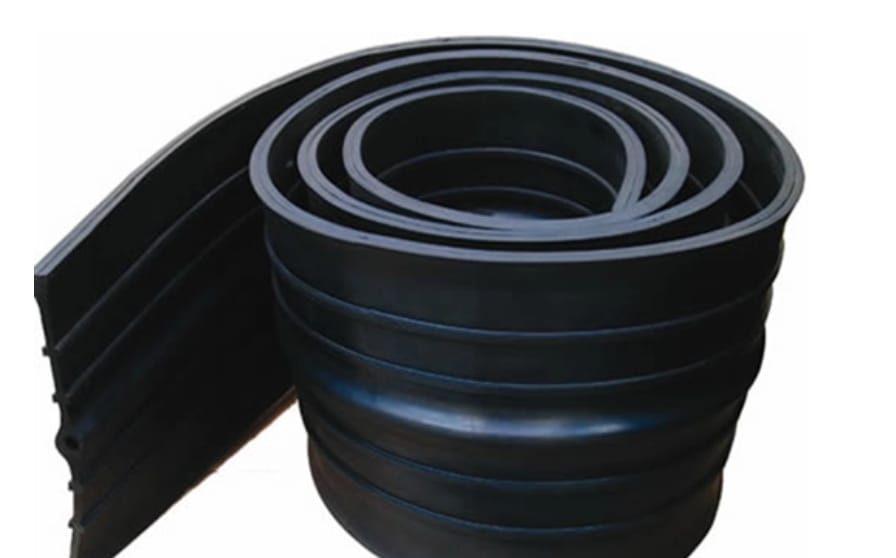
Positioning and Fastening
Embedded (Center-placed) Type: Align the central hole of the waterstop with the centerline of the expansion joint (maximum deviation ≤5mm). Secure the flanges using U-shaped rebar clips or specialized clamps spaced 30–50 cm apart.
Surface-mounted (Back-applied) Type: Orient the ribbed side toward the water-facing side. Fasten along the edges using steel nails and washers spaced 20–30 cm apart, ensuring tight contact with the substrate.
Steel-edged Waterstop: Secure the steel edges to the structural reinforcement bars using galvanized wire threaded through the pre-drilled holes (spacing: 30–40 cm). When welding, wrap the rubber section with a wet cloth to prevent heat damage.
Strictly prohibit piercing the waterstop body directly with wire; any puncture will cause leakage.
Joint Connection
Hot Vulcanization (Most reliable): Cut ends at an angle, roughen and clean surfaces, and ensure an overlap of ≥10 cm. Use a specialized vulcanizing mold to apply heat and pressure (approx. 145°C for 15–20 minutes); joint strength must be at least 80% of the base material.
Cold Bonding: Ensure an overlap of ≥15 cm. Apply specialized adhesive, press firmly, and allow to cure; do not disturb or move the joint during curing.
Steel Edges: Connect using bolted splice plates or rivets with an overlap of ≥5 cm, followed by waterproofing/sealing.
Simple, untreated overlaps are strictly prohibited.
Precautions During Concrete Pouring
Layered Pouring: Pour and vibrate the concrete around the lower half of the waterstop first to ensure density, then pour the upper half. Avoid filling the formwork all at once, which could displace the waterstop due to the pressure of the concrete. The vibrator must be kept at least 30 cm away from the waterstop; direct contact or close-proximity vibration against the waterstop is strictly prohibited.
Dedicated personnel must monitor the process and make immediate adjustments if any displacement occurs.
Thermal insulation measures are required when the ambient temperature falls below 5°C. Actual construction must adhere to the design drawings and project specifications; watertightness tests may be conducted on critical sections to verify performance.