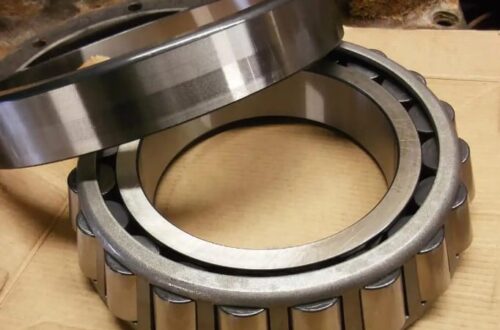
The defining characteristic of hollow roller bearings lies in the unique construction of their rolling elements. Rather than being solid cylinders, these elements feature a hollow structure with a cylindrical through-hole. The direct physical consequence of this design is that the rolling elements undergo controlled elastic deformation when subjected to load. Unlike the stress distribution associated with solid rollers—which is essentially rigid—the wall thickness of hollow rollers undergoes slight changes under load, thereby altering the contact area and pressure distribution pattern between the rollers and the inner and outer raceways.
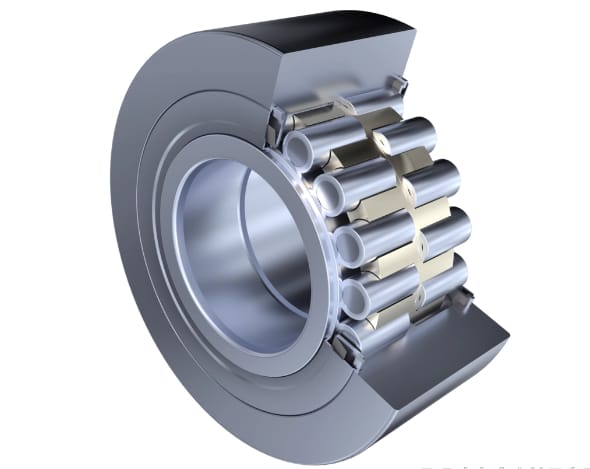
This mechanism of controlled deformation offers opportunities to tune various mechanical properties. Because the hollow structure reduces the overall stiffness of the rolling element, the pressure distribution within the contact zone becomes more uniform under load, effectively lowering peak contact stress. This helps retard fatigue on contact surfaces, positively influencing the bearing’s theoretical service life under heavy-load conditions. Furthermore, the slight internal deformation process absorbs and dissipates a portion of vibrational energy, contributing to smoother operation.
From thermodynamic and kinematic perspectives, the hollow core introduces additional variables. The internal cavity acts as a zone for minute air convection and heat exchange. During high-speed rotation, frictional heat generated within the bearing conducts through the roller walls into the cavity; while the resulting heat dissipation is limited, it nonetheless plays a subtle role in overall thermal management. Kinematically, the reduced mass of the rolling elements lowers centrifugal forces during high-speed rotation, helping to maintain a stable dynamic relationship between the rolling elements and the cage.
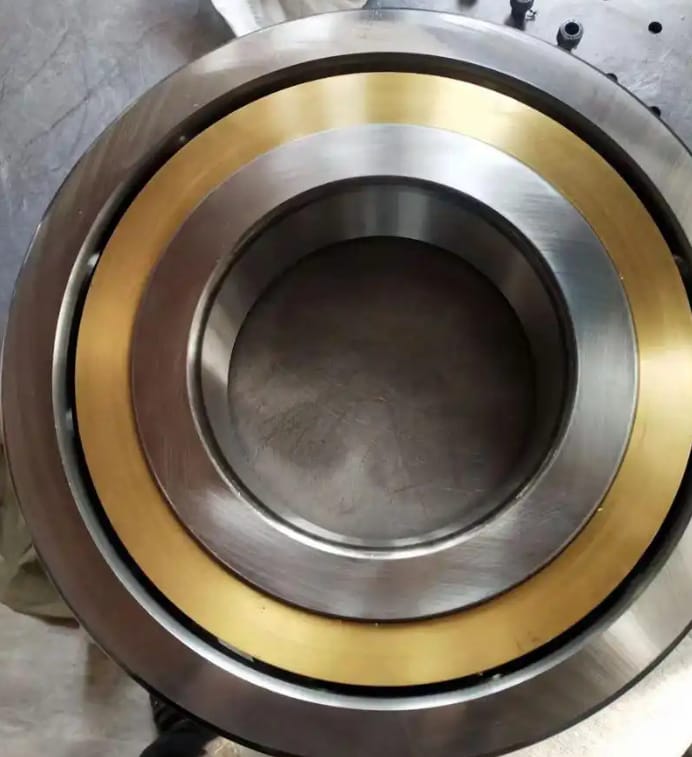
Regarding application suitability, the specific characteristics of these bearings make them valuable in certain contexts. They are generally unsuitable for ultra-precision machine tool spindles that demand extreme rigidity and near-zero deformation, as controlled deformation is an inherent design objective here. Conversely, in industrial transmission applications that are sensitive to vibration, require the mitigation of shock loads, or involve medium-speed, heavy-load operations, the bearing’s ability to distribute loads evenly and dampen vibrations proves highly advantageous. Regarding material selection, ensuring the strength and fatigue life of the hollow roller’s wall necessitates specific standards for steel purity, heat treatment processes, and the precision of subsequent grinding operations.
Hollow roller bearings are not intended to replace all conventional solid roller bearings; rather, they offer a solution based on different mechanical principles. The core of this technology lies in the proactive design of the rolling element structure, which transforms elastic deformation—typically a phenomenon to be avoided—into a functional engineering attribute, thereby achieving a specific balance among load distribution, vibration damping, and operational stability. This design approach exemplifies a nuanced evolution in mechanical components, shifting from passive load-bearing elements to components capable of specific functional responses.