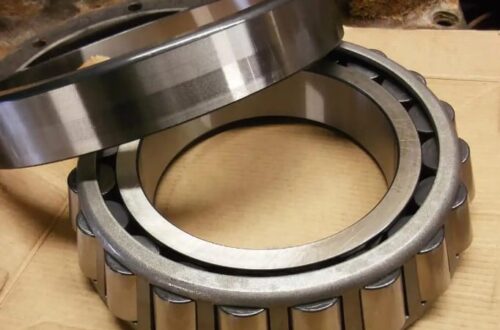
In industrial machinery, bearings are core components that support rotational motion; their performance directly impacts equipment operating precision, load-bearing capacity, and service life. Among the various types of bearings, double-row cylindrical roller bearings play an irreplaceable role in specific applications due to their unique structural design. This article aims to systematically introduce the characteristics of these bearings through a comparative analysis.
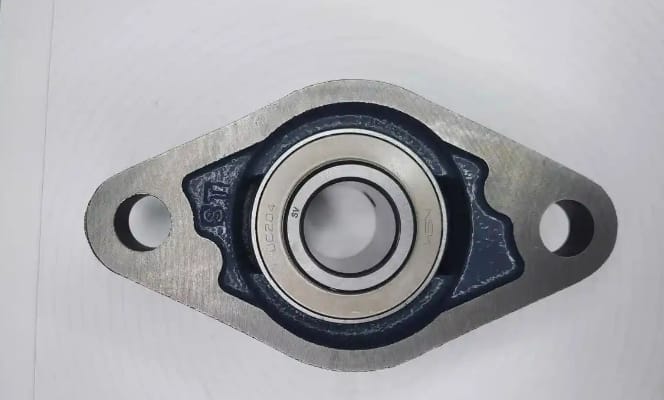
In terms of basic structure, a double-row cylindrical roller bearing can be viewed as an integrated combination of two single-row cylindrical roller bearings. It features two rows of cylindrical rollers—typically made of high-precision steel—arranged between the inner and outer rings. Compared to the single-row design, the most obvious difference is the doubling of the number of rollers. This design is not merely a simple stacking of components but results in significant changes in mechanical performance.
To better understand their characteristics, we can compare them with several common bearing types or technical solutions.
1. Comparison with single-row cylindrical roller bearings
Single-row cylindrical roller bearings are among the most common types; their advantages include relatively low frictional resistance, suitability for high rotational speeds, and the ability to withstand substantial radial loads. However, their drawback is a near-zero capacity to handle axial loads (forces acting along the axis of the shaft) and weak resistance to overturning moments (moments that tend to tilt the shaft).
Double-row cylindrical roller bearings effectively address these shortcomings. With two rows of rollers, their radial load-bearing capacity is far superior to that of single-row bearings of the same size. More importantly, specific roller and raceway designs enable them to withstand certain bidirectional axial loads and significant overturning moments. This makes them more stable and reliable in applications involving heavy rotating shafts that may experience slight deflection or misalignment. Naturally, this structural complexity comes at a cost; for instance, their limiting speed is usually lower than that of single-row bearings of the same specification, and manufacturing costs are higher. The key to selection lies in whether the application prioritizes high rotational speeds or high load-carrying capacity and resistance to moment loads.
2. Comparison with Spherical Roller Bearings
Spherical roller bearings are another type of robust radial bearing, with their core advantage being their “self-aligning” capability. Featuring spherical raceways, they allow for a certain degree of angular misalignment between the inner and outer rings, thereby automatically compensating for misalignment caused by installation errors or shaft deflection; they also possess a certain capacity to handle axial loads.
Double-row cylindrical roller bearings generally lack the self-aligning capability of spherical roller bearings. Their design prioritizes rigidity and precision. Under ideal alignment conditions, double-row cylindrical roller bearings offer superior rotational precision and system rigidity, making them highly suitable for equipment such as machine tool spindles and precision rolling mills that require precise spindle guidance and minimal deflection at the working end. In contrast, spherical roller bearings are better suited for environments involving long shafts, multiple support points, or conditions where precise alignment is difficult to maintain, such as in mining machinery and vibrating screens. In short, the former excels in high-performance applications requiring precision, while the latter excels in adaptability and fault tolerance under harsh operating conditions.
3. Comparison with Plain Bearings
Plain bearings (sliding bearings) support loads via an oil film between the journal and the bearing shell; their operating principle differs fundamentally from that of rolling bearings. Plain bearings offer advantages such as a large load-bearing area, smooth and quiet operation, and the ability to withstand massive impact loads. Furthermore, if a complete hydrodynamic lubrication film is maintained during high-speed rotation, they can achieve an exceptionally long service life.
As a type of rolling bearing, the double-row cylindrical roller bearing exhibits significantly lower starting friction than a plain bearing, making it easier to establish effective lubrication during low-speed operation or startup. Another notable advantage is its high degree of standardization and ease of maintenance; replacing bearing components is far quicker than refurbishing the bearing shell of a large plain bearing. Double-row cylindrical roller bearings offer distinct advantages in applications requiring frequent start-stop cycles, high transmission efficiency, or compact designs. However, for operating conditions involving ultra-high loads and ultra-high speeds—combined with optimal lubrication—such as the main shafts of large hydroelectric generators or marine propulsion systems, plain bearings remain the preferred choice.
Based on the comparison above, we can summarize the key characteristics and application considerations of double-row cylindrical roller bearings:
1. High Radial Load Capacity and Rigidity
The arrangement of two rows of rollers results in a high density of rollers per unit of projected area, enabling the bearing to distribute and withstand extremely high radial loads. This structure imparts exceptional overall rigidity, meaning the bearing undergoes minimal deformation under load. Such rigidity is crucial for ensuring the precision of machining equipment and maintaining the stable operation of heavy-duty rotor systems.
2. Limited Axial Load and Moment-Resisting Capabilities
While they cannot match specialized thrust bearings or tapered roller bearings, the well-engineered double-row design allows them to handle moderate bidirectional axial forces and overturning moments encountered during operation. This often eliminates the need for complex auxiliary axial positioning bearings, thereby simplifying the support structure.
3. Precision and Stability
By eliminating the degrees of freedom associated with self-aligning designs, double-row cylindrical roller bearings—provided they are properly aligned—achieve more precise rotational trajectories while keeping vibration and noise levels low. This stability is highly desirable for precision transmission and machining applications.
4. Installation Requirements
This is a critical factor in their application. Compared to self-aligning bearings, these bearings impose stricter requirements regarding the alignment of the shaft and housing bore, as well as the precision of the mounting surfaces. Improper installation can lead to uneven load distribution across the roller rows, significantly compromising performance and service life. Ensuring high-quality installation is a prerequisite for fully realizing the bearing’s advantages. V. Typical Application Areas
Based on the characteristics mentioned above, double-row cylindrical roller bearings are commonly found in the following types of equipment: spindle supports for large machine tools; gearboxes and main shafts for wind turbines; roll necks in rolling mills; input and output shafts of large gearboxes; and wheel-axle systems for certain heavy-duty transport equipment. In these applications, the equipment must withstand heavy loads and maintain high operational precision, often within constrained spatial limits.
The double-row cylindrical roller bearing is a mechanical component that achieves an excellent balance among load-carrying capacity, rigidity, and precision. While not a universal solution for every scenario, it offers a reliable and efficient choice for the specific operating conditions it was designed to address—namely, precision, heavy-duty applications characterized by high radial loads, a requirement for moment-load resistance, and favorable installation conditions. Advances in engineering technology are often defined by finding the most suitable solutions for specific challenges, and the double-row cylindrical roller bearing stands as a prime example of this engineering approach.