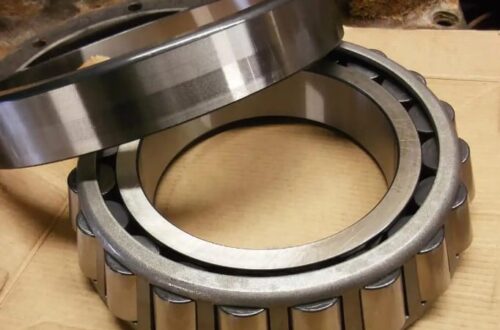
Double-row cylindrical roller bearings are a common type of rolling-element bearing characterized by two rows of cylindrical rollers housed within the bearing assembly, typically comprising an inner ring, an outer ring, rolling elements, and a cage. These bearings are primarily designed to support heavy radial loads and can accommodate a certain amount of axial load, though they are generally not intended for purely axial loading. They feature a compact structure and high rigidity, making them suitable for medium-speed operating conditions.
Double-row cylindrical roller bearings are widely used in mechanical transmission systems; they are frequently found in equipment such as machine tool spindles, rolling mills, and large electric motors. The dual-row roller design provides high radial load-carrying capacity, while specific structural features—such as integral ribs on the inner or outer rings—allow them to withstand bidirectional axial loads to a certain extent.
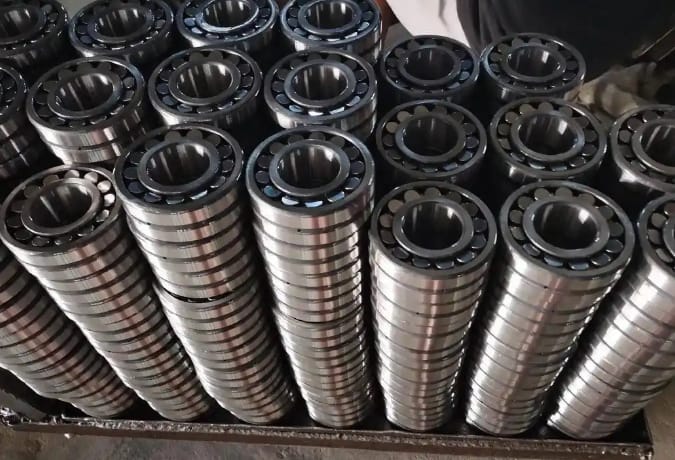
The specifications of double-row cylindrical roller bearings involve a range of technical parameters. Determining these specifications is crucial for the correct selection, installation, and operation of the bearings. The details regarding specifications are outlined below across several key aspects.
I. Key Dimensional Parameters
These constitute the core of the bearing specifications, directly determining the installation dimensions and the space required for load support.
1. Inner Diameter: Refers to the bore diameter of the inner ring, which mates with the shaft journal. This is one of the first dimensions to be determined during bearing selection, as it must match the shaft diameter.
2. Outer Diameter: Refers to the diameter of the outer cylindrical surface of the outer ring, which fits into the housing bore.
3. Width: Refers to the total thickness of the bearing. For double-row cylindrical roller bearings, the width is typically greater than that of single-row bearings to accommodate the two rows of rollers.
4. Chamfer Dimensions: Refer to the radius of the arc connecting the end face of the inner or outer ring to the radial face. This dimension is critical for the design of clearance for adjacent components during installation.
II. Structural Types and Designations
Double-row cylindrical roller bearings come in various structural configurations to meet diverse application requirements. These configurations are typically distinguished by specific bearing designations. 1. Inner and outer ring rib configurations: Common forms include inner rings with no ribs, single ribs, or double ribs; outer rings may also be designed with ribs. These configurations determine whether the bearing can withstand axial loads and the direction of such loads.
2. Cage type: Cages serve to separate and guide the rolling elements. Common types include solid copper alloy cages, pressed steel cages, and engineering plastic cages. Cages made of different materials are suitable for varying rotational speeds and lubrication conditions.
3. Internal clearance: This refers to the gap between the rolling elements and the raceways inside the bearing. Clearance is categorized into radial and axial clearance; its magnitude directly affects the bearing’s operating accuracy, temperature rise, and service life. Standard clearance classes are usually available, and custom specifications can be provided for special operating conditions.
4. Precision class: Bearing manufacturing precision is categorized into different classes, such as normal, high, and precision grades. Higher precision classes entail stricter tolerances for dimensions and rotational accuracy, making them suitable for applications requiring high rotational precision, such as precision machine tool spindles.
III. Performance Parameters and Ratings
These parameters reflect the bearing’s load-carrying capacity and speed performance, serving as crucial criteria for selection and calculation.
1. Basic dynamic load rating: This refers to the load a bearing can withstand while rotating and still achieve a rated life of one million revolutions. It is a key indicator of the bearing’s fatigue resistance.
2. Basic static load rating: This refers to the maximum load a bearing can withstand while stationary or rotating at very low speeds. Exceeding this load may cause permanent deformation at the contact points between the rolling elements and the raceways.
3. Limiting speed: This refers to the maximum continuous operating speed permissible under specific lubrication and cooling conditions. Exceeding the limiting speed can lead to excessive bearing temperatures and lubrication failure, resulting in damage.
4. Fatigue life: This refers to the total number of revolutions or hours of operation a bearing can achieve before the onset of fatigue failure under specific load and speed conditions. It is an estimated value based on statistical probability. IV. Materials and Heat Treatment
Bearing performance is inextricably linked to the materials used and the heat treatment processes applied.
1. Materials for Rings and Rolling Elements: High-carbon chromium bearing steel is typically used; after appropriate heat treatment, this material exhibits high hardness, high wear resistance, and excellent contact fatigue strength. For special environments—such as high-temperature or corrosive conditions—stainless steel or other specialized materials may be employed.
2. Heat Treatment Processes: These primarily involve quenching and low-temperature tempering to achieve a martensitic microstructure, ensuring high hardness and the necessary toughness for the components. The quality of heat treatment directly impacts the bearing’s durability and reliability.
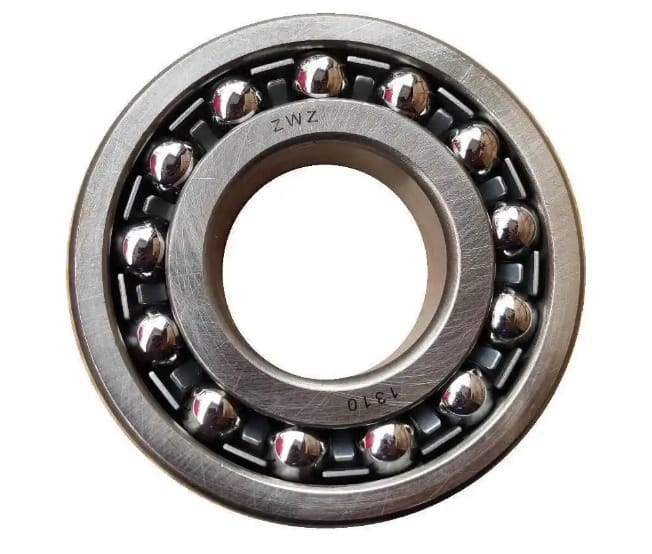
V. Lubrication Requirements
Proper lubrication is essential for the normal operation of bearings.
1. Lubrication Methods: Options include grease lubrication and oil lubrication. Grease lubrication is simple, allows for relatively straightforward sealing designs, and requires less frequent maintenance; oil lubrication offers superior cooling effects and is better suited for high-speed or high-temperature operating conditions.
2. Lubricant Selection: The appropriate brand and grade of grease or oil must be selected based on the bearing’s operating temperature, rotational speed, load, and environmental conditions.
VI. Installation and Fits
Correct installation and fit are fundamental to ensuring optimal bearing performance.
1. Tolerance Fits (Shaft and Housing): An interference fit is typically used between the inner ring and the shaft to prevent the ring from sliding; a clearance fit or a light interference fit is often used between the outer ring and the housing to allow for slight movement due to thermal expansion.
2. Installation Methods: Appropriate tools should be used to apply force evenly to the ring being installed; striking the rolling elements or the cage directly is strictly prohibited. For applications requiring a significant interference fit, methods such as thermal mounting (shrink fitting) or hydraulic mounting may be employed.
VII. Sealing and Protection
Depending on the operating environment, bearings may require sealing devices to prevent lubricant leakage and the ingress of external contaminants.
1. Contact Seals: Examples include rubber seals; these offer excellent sealing performance but generate relatively high frictional resistance.
2. Non-contact Seals: Examples include labyrinth seals; these generate minimal friction and are suitable for high-speed applications, though their dust- and water-exclusion capabilities are slightly inferior to those of contact seals. The specifications for double-row cylindrical roller bearings constitute a comprehensive system covering dimensions, structure, performance, materials, lubrication, installation, and other aspects. In practical applications, a rational selection must be made by comprehensively considering these parameters based on specific requirements—such as host machine design, load conditions, rotational speed ranges, operating environments, and precision needs. Selecting the correct specifications is a crucial prerequisite for ensuring the stable, reliable, and long-lasting operation of the bearings and the entire mechanical system. When obtaining specific specification details, one should consult the official product catalogs or technical documentation provided by the manufacturer to ensure data accuracy and applicability.