Hot mounting is a very common method for installing bearings, particularly those requiring an interference fit. By heating the bearing to expand its inner ring, it can be easily fitted onto the journal; this not only saves effort but also avoids damage to the raceways and rolling elements that can result from hammering the bearing into place. However, higher temperatures are not necessarily better.
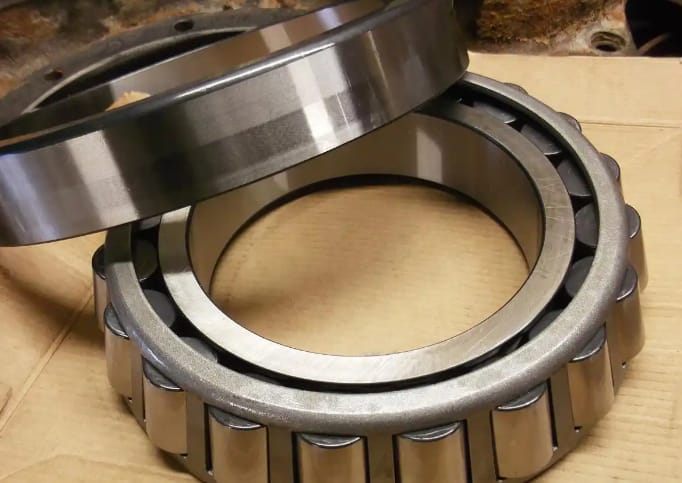
Hot mounting temperature should be controlled between 100°C and 120°C
Generally, it is recommended to keep the bearing heating temperature between 100°C and 120°C, without exceeding 120°C. This temperature range allows for sufficient expansion without compromising material properties.
Excessive heating can cause the bearing material to soften due to tempering, resulting in reduced hardness and wear resistance; in severe cases, it can compromise dimensional accuracy and service life. For high-precision bearings, damage caused by overheating is often irreversible.
Install quickly after heating
Once heated, the bearing should be immediately aligned with the journal, pushed quickly and smoothly into the mounting position, and secured promptly.
Because bearings dissipate heat and contract rapidly when exposed to air, a slow installation process can lead to issues such as improper seating, jamming, or tilting. These problems not only make rework difficult but can also affect subsequent operational precision.
A common on-site error: Direct flame heating
In some maintenance settings, blowtorches or oxy-acetylene flames are still used to heat bearings directly; this is a highly incorrect practice.
Direct flame heating causes localized overheating and uneven thermal expansion, which can easily lead to raceway deformation, changes in the microstructure, or even cracking. Even if the installation appears successful, the bearing’s service life will be significantly reduced.
What are the correct heating methods?
The industry currently recommends the following two methods:
Induction heater: Offers rapid, uniform heating with precise temperature control; it is the most commonly used method for bearing installation. Constant-temperature oil bath heating: Suitable for small and medium-sized bearings; it ensures uniform heating, though the oil must be kept clean and the temperature strictly controlled.
Summary
Hot mounting of bearings may seem simple, but it directly impacts installation quality and service life. Keep three key points in mind:
Control the heating temperature between 100°C and 120°C; strictly avoid exceeding 120°C;
Install quickly and secure the bearing promptly after heating to prevent misalignment during cooling;
Direct heating with an open flame is strictly prohibited; prioritize the use of induction heaters or constant-temperature oil baths.
Proper installation methods are often more important than selecting more expensive bearings; they are crucial for extending bearing service life and reducing equipment failure rates.


