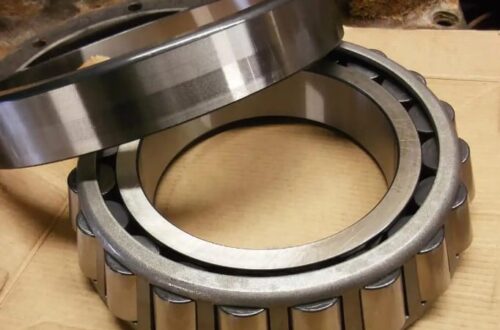
1. Incorrect installation of rolling bearings, or fit tolerances that are too tight or too loose.
Solution: The performance of a rolling bearing depends not only on its manufacturing precision but also on the dimensional accuracy, geometric tolerances, and surface roughness of the mating shaft and housing bore, as well as the chosen fit and the correctness of the installation. In standard horizontal motors, properly installed rolling bearings typically bear only radial loads. However, if the fit between the inner ring and the shaft—or the outer ring and the end cap—is too tight (i.e., excessive interference), the bearing clearance is reduced after assembly, sometimes to near-zero levels. This impedes smooth rotation and causes overheating during operation. Conversely, if the fit is too loose, relative movement occurs between the inner ring and the shaft (or the outer ring and the end cap), generating frictional heat and causing the bearing to overheat. Standard specifications position the inner diameter tolerance zone of the bearing inner ring (acting as the reference component) below the zero line; consequently, the resulting fit with the shaft is significantly tighter than a fit involving a standard reference bore.
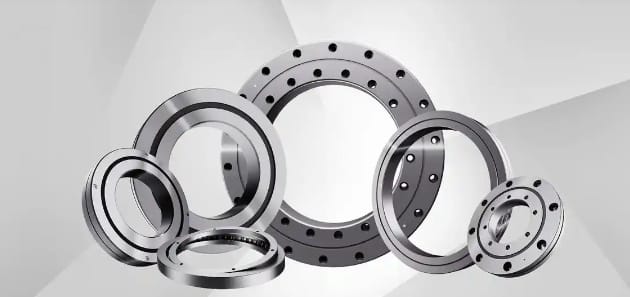
2. Improper selection, use, or maintenance of grease; poor quality or degraded grease; or contamination with dust and impurities can all cause bearing overheating.
Solution: Incorrect grease quantity—whether excessive or insufficient—can also lead to overheating. Excessive grease causes significant friction between the rotating bearing components and the lubricant, while insufficient grease may result in dry friction and heat generation. Therefore, the grease quantity must be adjusted to fill approximately 1/2 to 2/3 of the bearing housing’s internal volume. Unsuitable or degraded grease should be cleaned out and replaced with appropriate, clean grease.
3. Insufficient axial clearance between the motor’s outer bearing cap and the outer diameter of the rolling bearing.
Solution: For large and medium-sized motors, ball bearings are typically used at the non-drive end. A roller bearing is used at the shaft extension end, allowing the rotor to expand freely when heated.
In contrast, small motors typically use ball bearings at both ends; consequently, there must be an appropriate clearance between the outer bearing cap and the bearing’s outer race. Otherwise, the bearing may overheat due to excessive axial thermal expansion.
If this issue arises, the front or rear bearing cap should be slightly machined down, or a thin paper shim inserted between the bearing cap and the motor end shield, to ensure sufficient clearance between the outer bearing cap and the bearing’s outer race.
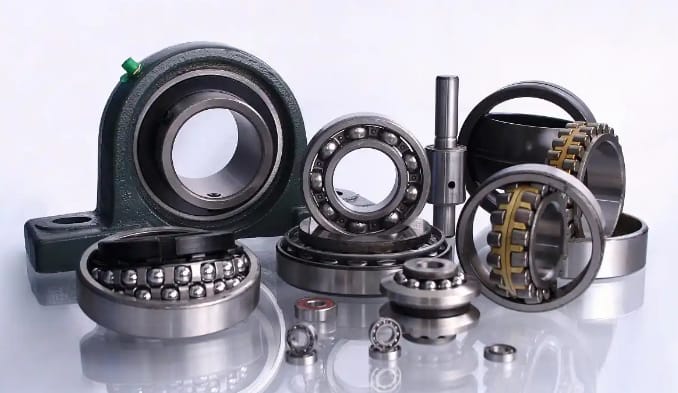
4. The end shields or bearing caps on either side of the motor are not properly installed.
Solution: If the end shields or bearing caps are installed out of parallel or the mating surfaces (rabbets) are not seated tightly, the balls may deviate from their raceway during rotation, causing overheating. The mating surfaces must be realigned to ensure a flush fit, and the bolts tightened evenly.